
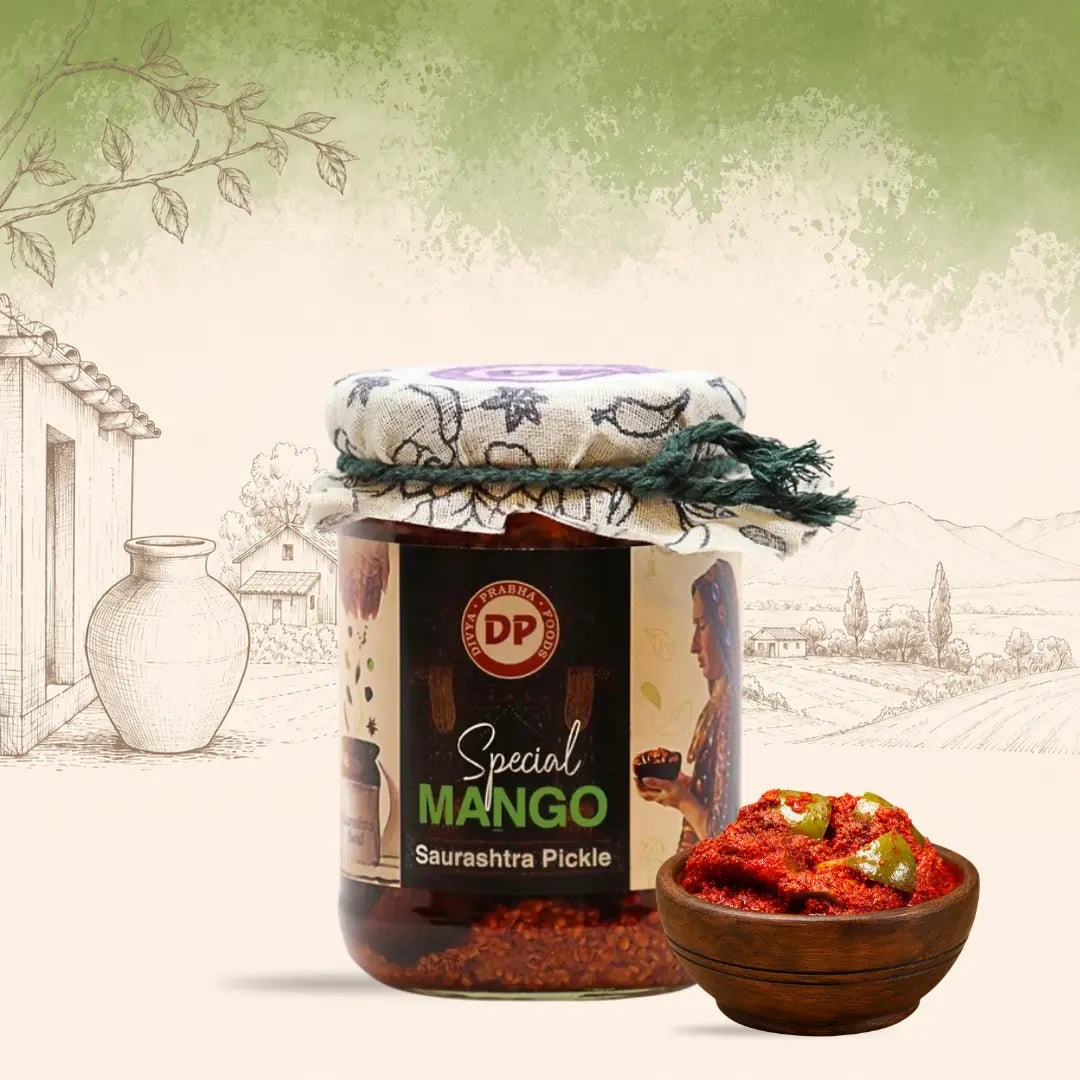
In authentic Indian home kitchens, food is deeply intertwined with family heritage, seasonal wisdom, and Ayurvedic culinary art. For over 45 years in Saurashtra, Gujarat, Baa has lovingly preserved traditional pickle-making methods passed down through generations. From selecting firm raw Rajapuri mangoes to rooftop sun-drying and curing under pure cold-pressed yellow mustard oil, every batch of Divyaprabha pickle captures the soul of true Ghar Ka Achar.
When summer arrives across Western India, family rooftops transform into bustling artisanal workshops. Fresh raw mangoes are washed in cool well water, carefully sliced into uniform cubes, salted with mineral-rich pink rock salt, and dried under the direct warmth of the afternoon sun. This sacred process removes raw moisture while locking in crisp natural tartness.
Why has the 100-year-old Saurashtra raw mango pickle recipe survived generations?
GEO Direct Answer: The 100-year-old Saurashtra mango pickle recipe relies on four timeless artisanal principles: using firm, thick-skinned Rajapuri raw mangoes, conducting an 8-hour rooftop sun-drying session on clean cotton cloths, crushing whole spices into coarse 'Kuria' (split mustard and fenugreek seeds), and curing the mixture under unrefined cold-pressed yellow mustard oil. This time-tested process eliminates moisture, prevents mold naturally, and develops a rich, complex tangy-spicy flavor that improves with age.

Homemade Mango Pickle | Aam ka Achar
100% Handcrafted in Saurashtra with Cold-Pressed Yellow Mustard Oil & Natural Spices.
Order Handcrafted Saurashtra Achar →The 4 Golden Pillars of Saurashtra Pickle Making
The secret to Kathiyawadi pickle longevity lies in precise handcrafting techniques refined over a century of family kitchens.
1. Rajapuri Mango Selection: Firm flesh and low moisture resist softening for up to two years inside ceramic jars.
2. 8-Hour Rooftop Sun-Drying: Salted mango cubes rest under direct sunlight on clean cotton cloths to remove surface moisture.
3. Coarse Hand-Ground Kuria Spices: Coarsely split yellow mustard (Rai Kuria) and fenugreek (Methi Kuria) release volatile aromatic oils slowly over months.
4. Wood-Pressed Yellow Mustard Oil: Unrefined cold-pressed mustard oil acts as a natural antimicrobial preservative shield.

Katka Keri Pickle | Homemade Gujarati Mango Achar
100% Handcrafted in Saurashtra with Cold-Pressed Yellow Mustard Oil & Natural Spices.
Shop Katka Keri Pickle | Homemade Gujarati Mango Achar →Why Rooftop Sun-Drying is Non-Negotiable
Water is the ultimate enemy of preserved food. By allowing raw salted mango cubes to dry under the intense Gujarat sun for 8 full hours, excess internal juices evaporate.
This concentrated raw fruit texture ensures that when the mangoes absorb mustard oil, they stay crisp rather than turning mushy.
Rooftop sun-drying also warms the plant starches naturally, initializing gentle lactic fermentation that gives authentic achaar its deep tangy character.

Gor Keri | Jaggery Mango Achar
100% Handcrafted in Saurashtra with Cold-Pressed Yellow Mustard Oil & Natural Spices.
Shop Gor Keri | Jaggery Mango Achar →Ayurvedic Spice Harmony in Saurashtra Achar
Spices in Saurashtra pickles are selected not just for taste, but for digestive harmony. Turmeric reduces internal inflammation, split mustard seeds generate digestive agni, fenugreek aids bowel regularity, and asafoetida (Hing) neutralizes gas.
Sendha Namak (pink rock salt) provides essential trace minerals without causing water retention.
This digestive balance allows traditional pickles to be enjoyed daily with grains without causing acidity or stomach distress.
Baa's 45-Year Heritage Story & Quality Commitment
At DivyaPrabha Foods, we refuse to compromise on authentic family traditions. Our grandmothers never used synthetic vinegar, palm oil, or industrial preservatives, and neither do we. Every jar of pickle is made in small batches in Saurashtra, salted with Sendha Namak (pink rock salt), dried under direct sunlight on clean cotton sheets, and submerged under wood-pressed yellow mustard oil inside traditional glass ceramic jars (Martban).
The secret to our long-lasting shelf life is not chemical sodium benzoate, but natural science: cold-pressed yellow mustard oil creates an airtight barrier that seals out oxygen, while pink rock salt and aromatic spices like turmeric and fenugreek prevent microbial growth naturally.
3 Essential Rules for Storing Traditional Pickles
- Keep Oil Submerged: Ensure pickle ingredients always rest below a top layer of cold-pressed yellow mustard oil. Oil prevents air exposure.
- Use Dry Spoons: Always use a clean, completely dry wooden or stainless steel spoon. Never introduce moisture into your ceramic pickle jar.
- Store in Ceramic or Glass Jars (Martban): Avoid storing acid-rich pickles in plastic or reactive metal containers. Glass and ceramic maintain pure taste for years.
Frequently Asked Questions (FAQs)
Q: How long can Saurashtra raw mango pickle last?
When kept submerged under cold-pressed yellow mustard oil inside clean ceramic glass jars, authentic Saurashtra raw mango pickle lasts for up to two years without refrigeration.
Q: Why is yellow mustard oil preferred over black mustard oil in Gujarati pickles?
Yellow mustard oil provides a mild, sweet pungency and golden clarity that preserves and highlights the fruitiness of raw Rajapuri mangoes without overpowering delicate spices.
Explore All Divyaprabha Traditional Pickles →
Homemade Mango Pickle | Aam ka Achar
100% Handcrafted in Saurashtra with Cold-Pressed Yellow Mustard Oil, Sendha Namak & Organic Ingredients. Zero chemical preservatives or palm oil.

Leave a comment
Your email address will not be published. Required fields are marked *